
Three centuries of history
History of the Manor
An 18th-century noble house, seat of the Ponces de Carvalho family and the Count of Vilar Seco.
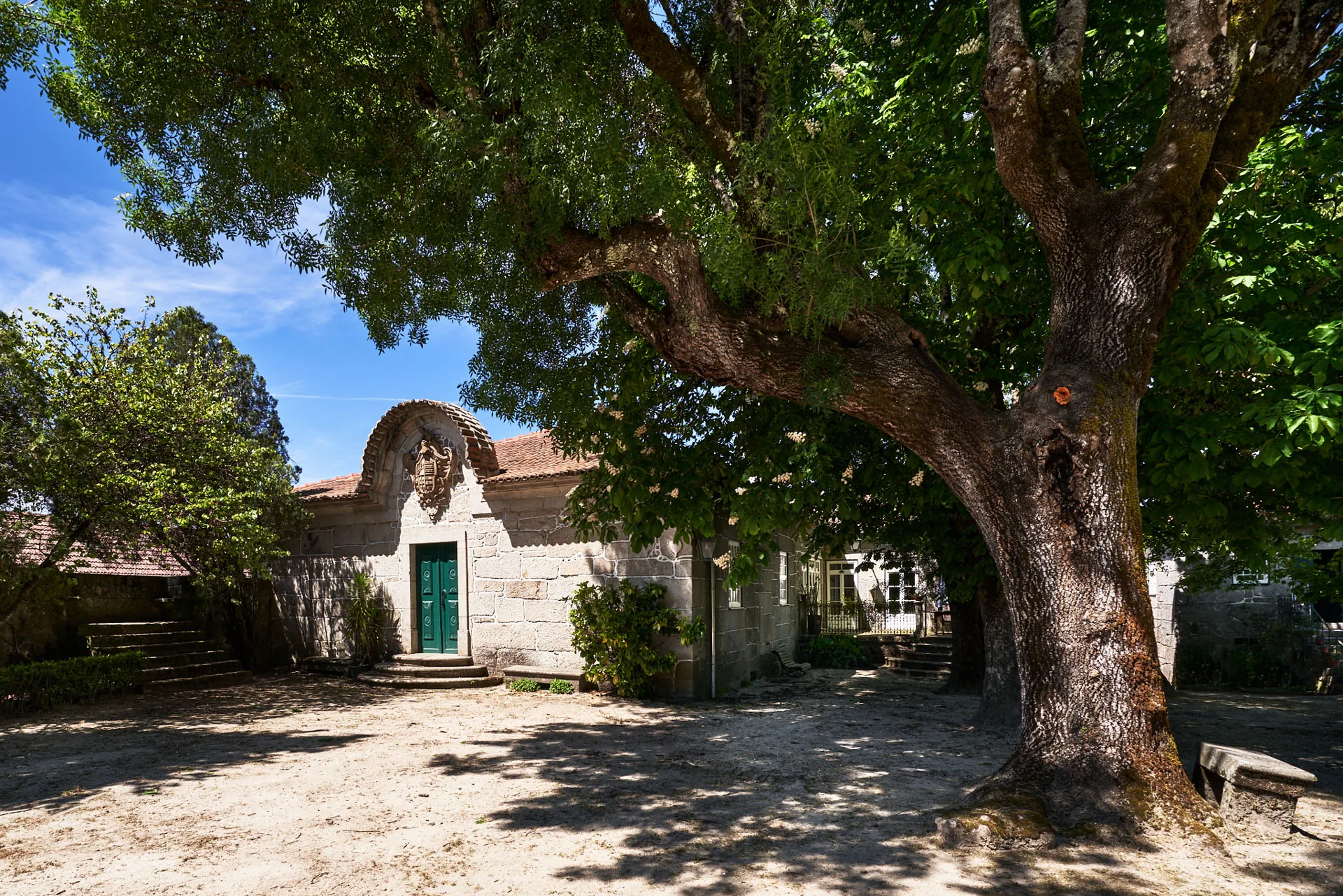
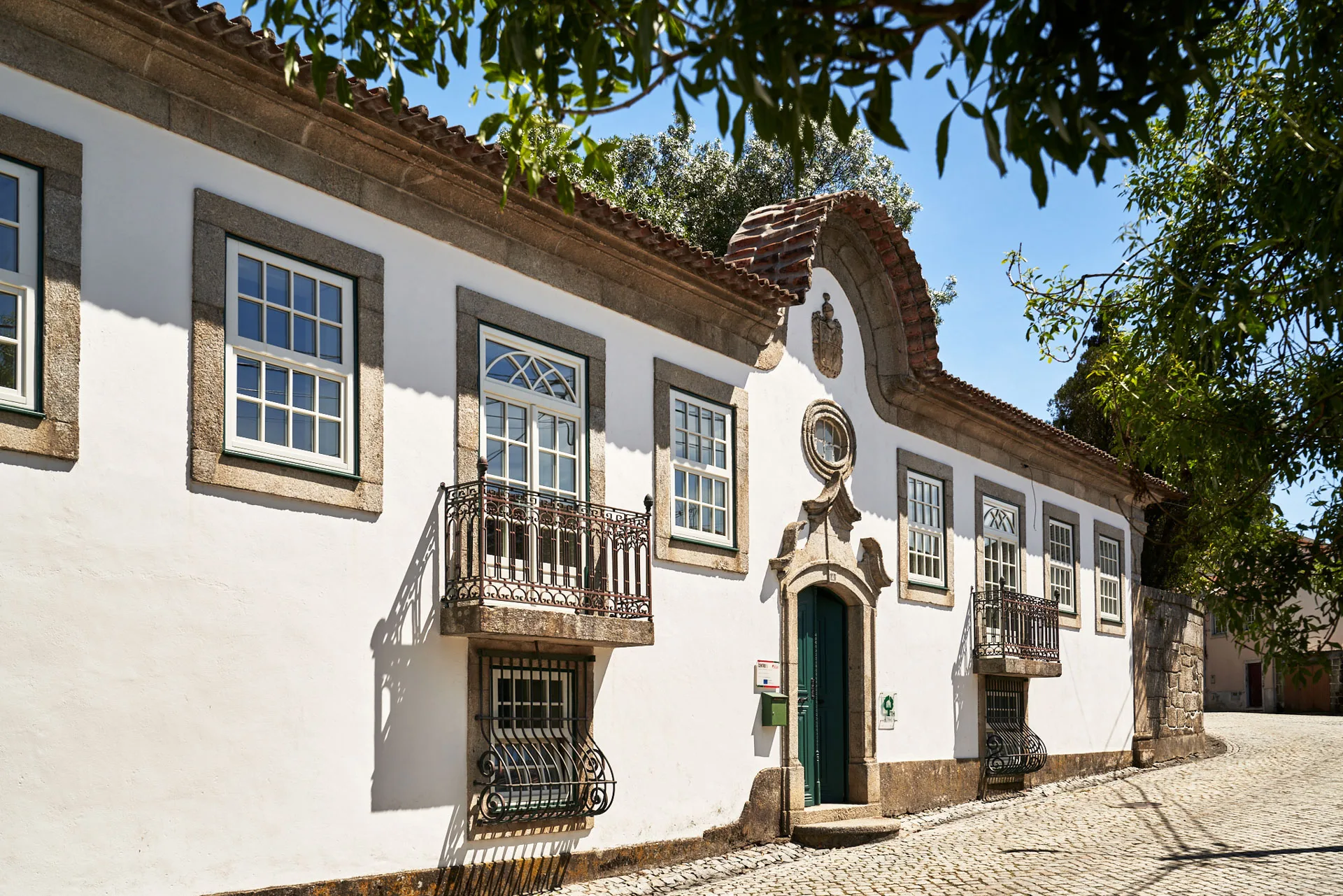
Solar de Vilar Seco, also known as Solar Ponces de Carvalho or Solar do Conde de Vilar Seco, stands at the heart of the village of Vilar Seco, in the municipality of Nelas, in the Dão wine region. Its long longitudinal façade, with wrought-iron balconies and the family coat of arms, defines the main street leading to the parish church.
Family home, working estate, place of memory. Three centuries of history still pulse beneath the granite of the Beira, between neoclassical stuccoes, French-style gardens and old wine cellars that, in the 19th century, produced one of the most renowned wines of the Dão.
Timeline
From the 12th century to today
12th century
Vilar Seco at the origins of the kingdom
The village of Vilar Seco (Vilar Siccu) is first mentioned around the year 1100, when Pedro Dias and his wife bequeath two houses to the monastery of Pedroso.
1258
Seat of the council of Senhorim
In the inquiries ordered by King Afonso III, Vilar Seco appears as the seat of the council of Senhorim, a role it would keep for centuries with town hall, jail and pillory.
17th c.
The Ponces family settles in the Beira
The Ponces family, originally Pons of Catalonia (Pons de Ribelles), settles in the Dão region. Bartolomeu Ponce and Maria de Araújo move to Santar, founding the Beira line.
1758
The founding couple of the Manor
Marriage in Vilar Seco of José António de Araújo Ponces and D. Eufémia Teresa Josefa Pereira Tenreiro de Figueiredo, believed to be the first inhabitants of what became the Manor.
18th c.
A noble house with a U-shaped plan
The Manor takes shape as a long two-storey 18th-century noble house, with central coat of arms and the undulating pediment characteristic of the seigneurial houses of Nelas.
c. 1800
D. Maria Tomásia and the first extensions
D. Maria Tomásia Ricardina Pereira Ponces (b. 1771), heiress to the house, marries the lawyer Silvério Rodrigues de Carvalho in Vilar Seco. She is credited with the first major extensions and renovations of the Manor.
1854
Miguel António Ponces de Carvalho
Lord of the Manor, Scribe and Inquisitor of the council of Senhorim and Mayor for the 1854-1856 term. In 1866 he is granted a coat of arms, formally fixing the name Ponces de Carvalho.
1879
The great 19th-century renovation
Joaquim Augusto Ponces de Carvalho, 1st Count of Vilar Seco, leads major restoration and extension works: halls with relief stuccoes, arches and ivory-lacquered doors, gilded carved leaves — the palatial taste of the second half of the 19th century.
1894
Casa Veva de Lima, Lisbon
The Count commissions a town palace on Rua Silva Carvalho in Lisbon, today known as Casa Veva de Lima, an urban echo of the same taste that renewed the Manor in Vilar Seco.
19th c.
The Manor’s wine cellars
The west courtyard housed the cellars, with presses and barrels still visible today, producing one of the most renowned wines of the Dão.
Until 2017
Ponces de Serpa family
The Manor remained in the hands of the Ponces de Serpa family, direct descendants of the Ponces de Carvalho, until 2017, kept inhabited and cared for across several generations.
Today
Solar de Vilar Seco project
Today the Manor is a Country House hotel, the result of a restoration project that returned the house to its residential use and opened it to guests. Recent interventions preserve the 18th-century lines, the stuccoes, the stonework and the rural atmosphere of the house.
The Building
Architecture, between late baroque and neoclassical
The Manor is a late-baroque and neoclassical residential building with a long rectangular plan and a four-sided hipped roof. The main two-storey façade is whitewashed masonry with pilastered corners, granite ashlar plinth and a cornice-and-eaves crown.
At the centre, a depressed-arch portal framed by a stepped pediment is topped by a circular oculus and, above the gable, the family coat of arms. On the ground floor, the windowsills carry the characteristic wrought-iron ’papo-de-rola’ bulging guards. On the noble floor, balcony windows with wrought-iron guards alternate with plain windowsills, in a rhythm designed to emphasise the central axis.
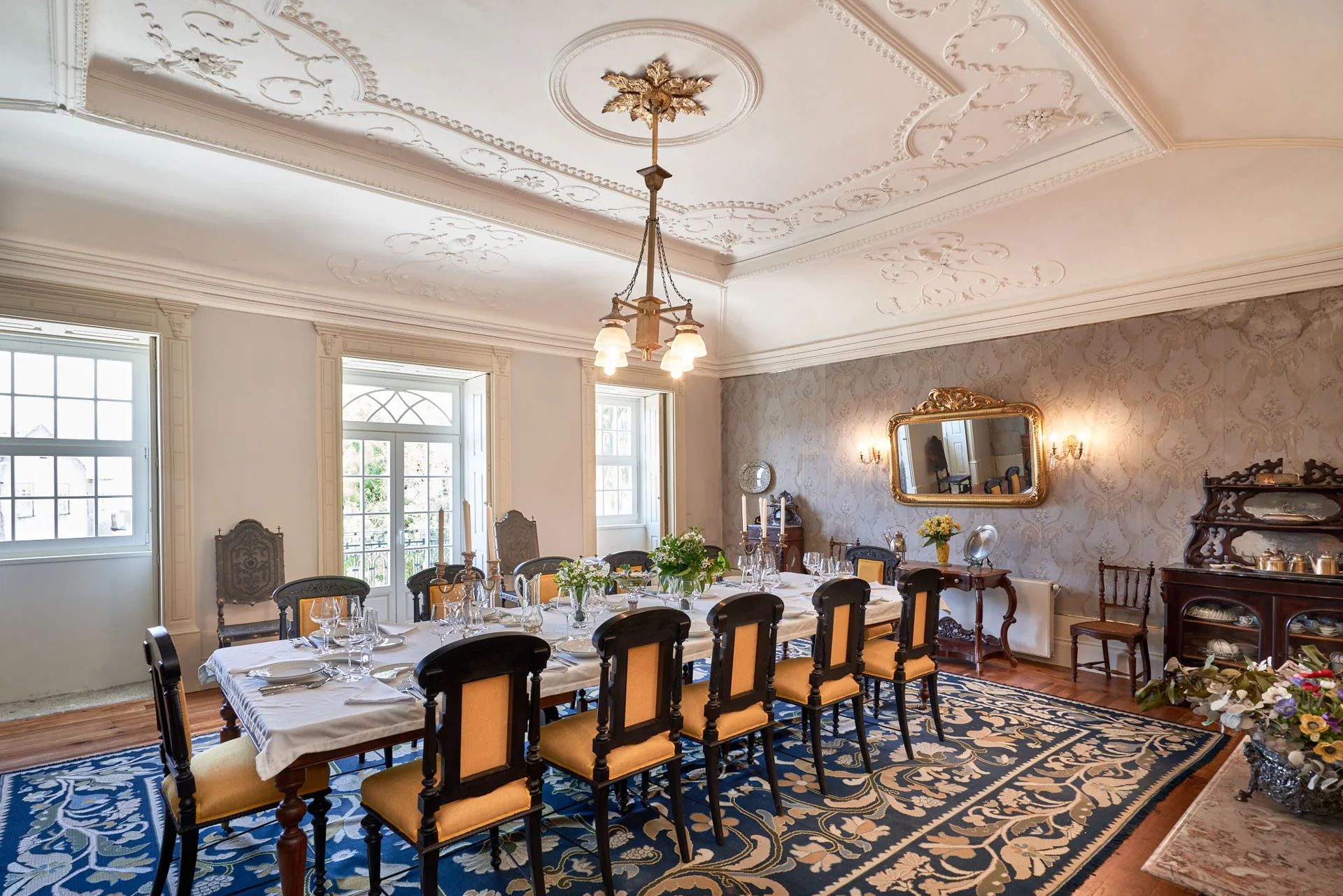
Inside, the distribution corridor and the main hall feature ceilings with delicate low-relief neoclassical stucco, dating from the 19th-century renovation by the 1st Count.
Working estate
Courtyards, gardens and cellars
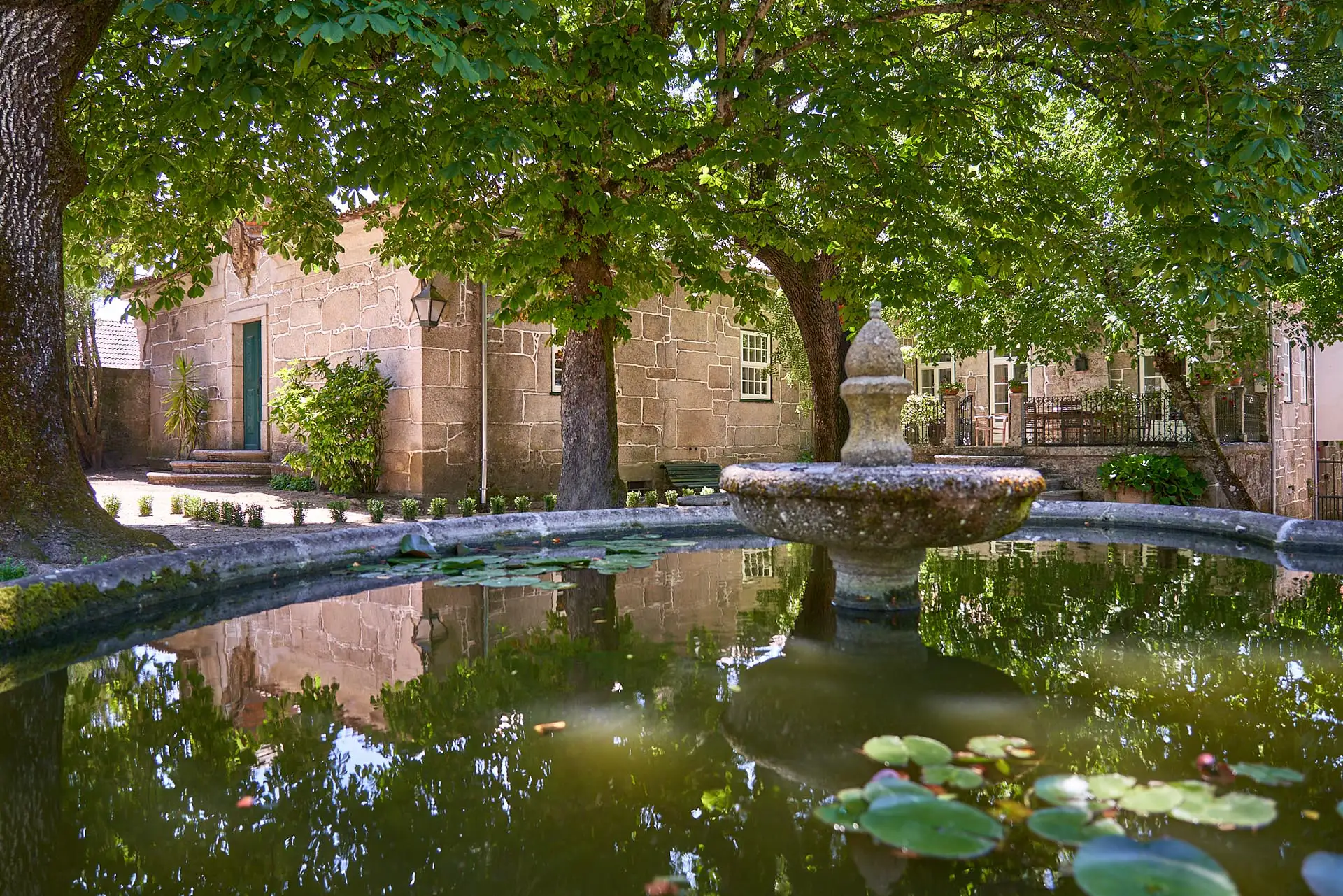
The estate includes vast outdoor grounds with French-style gardens and two courtyards. The east courtyard is a garden shaded by mature trees, flanked by two access gates and a granite pond with a four-leaf design and a round bowl at its centre.
In the west courtyard stand the old cellars of the Manor, with 19th-century presses and barrels still in place, witnesses to the wine-making tradition that sustained the house at the height of the Dão region.
Family memory
Ponces de Carvalho, lineage and succession
The Ponces name comes from Pons (Latin for bridge), borne by a Catalan noble family linked to the castle of Ribelles. In 1541, two brothers leave Spain: Jorge João de Pons settles in Viseu around 1550 and, modestly, adopts the name João Catalão.
In the Beira, Bartolomeu Ponce, son of João Catalão, marries Maria de Araújo and settles in Santar. From them descend generations across Santar, Aguieira, Canas de Senhorim and Vilar Seco, until the family establishes itself in the village with the marriage of José António de Araújo Ponces in 1758.
From this line come D. Maria Tomásia Ricardina Pereira Ponces, responsible for the first extensions of the house; Miguel António Ponces de Carvalho, the first to bear the coat of arms; and Joaquim Augusto Ponces de Carvalho, 1st Count of Vilar Seco, who set the 19th-century taste of the Manor in stone and stucco.
Synthesis based on the ongoing research for the book «O Solar de Vilar Seco, três séculos de história», drawing on Azevedo (1969), Carvalho (1991), Loureiro (1988), Veríssimo Serrão (2000), Eusébio & Marques (2005), Pinto & Laceiras (2024), Abranches (1956) and Falcão (1984).